Why a Clear Online Presence Supports Better Patient Acquisition
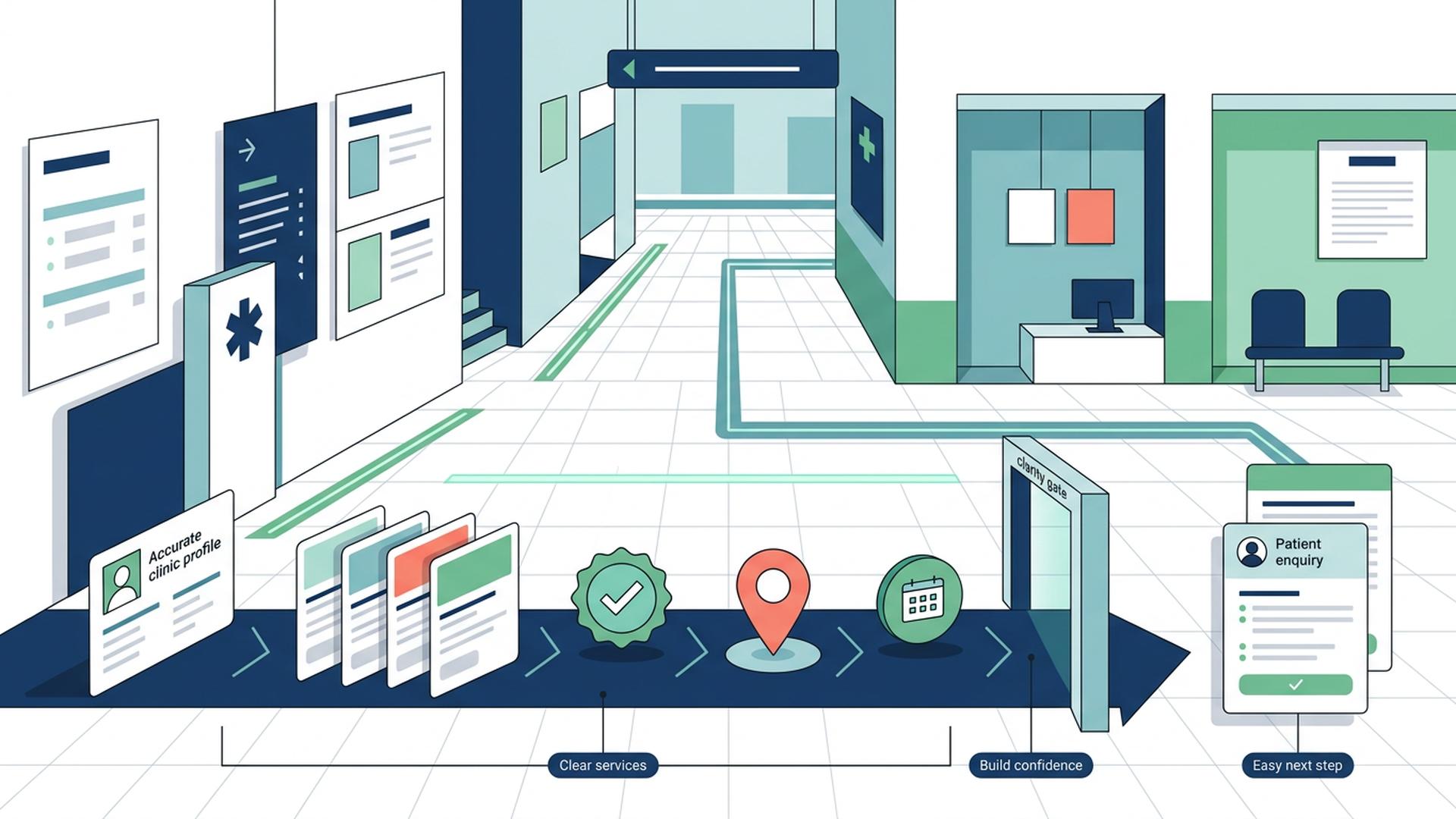
When your practice’s online presence is clear and consistent, you make it easier for patients to find you, trust you, and choose you. Accurate profiles, aligned details, and strong provider bios all quietly influence whether someone books or moves on. But it’s not just about visibility or polished profiles; what really determines if a curious visitor becomes a confirmed appointment is how you connect each digital touchpoint to…
How Your Online Presence Drives Patient Acquisition
When patients seek care, their first interaction with a provider is often digital. Your website, provider profiles, and clinician biographies function as a primary point of contact that can influence whether patients choose your practice.
Patients commonly use search engines and third-party healthcare platforms to compare options and verify details. Clear, accurate, and consistent information such as name, address, phone number, and operating hours across all online listings supports better local search performance.
Search engines are more likely to display practices prominently when this basic data is uniform and reliable.
After patients locate your practice online, tools such as convenient online scheduling can help translate interest into confirmed appointments.
This can reduce barriers to booking and minimize the likelihood that patients abandon the process.
Before booking tools can help, though, patients have to reach you at all and medical content is held to a higher bar than most. Because it falls under Google's Your Money or Your Life category, performing SEO for doctors depends on trust signals more than keywords: a named clinical author or reviewer on each page, visible credentials and profiles, references to reputable sources, and claims kept within what the evidence supports. Those same signals are what reassure a patient comparing three practices, so the work rarely serves search and patients separately.
Optimize Provider Profiles And Reviews To Build Trust
Some provider profiles convey credibility quickly, while others lead patients to hesitate or leave the page. A key factor is the quality of the bio and photo. Because most healthcare seekers read provider bios and a large proportion rely on visual cues, it's important to present a clear, patient‑focused description of qualifications, experience, and approach to care, along with a professional, consistent headshot used across platforms.
Patient reviews also contribute significantly to perceived trustworthiness. Providers with a higher volume of reviews often in the range of 7 to 12 or more tend to receive substantially more appointment requests, indicating that social proof influences patient decisions.
To encourage feedback, practices can share review links via SMS, email, and QR codes. Responding to reviews, both positive and negative, demonstrates engagement and accountability though healthcare carries a constraint other sectors don't. As the AMA sets out in its guidance on responding to online patient reviews, nothing prohibits a reply, but HIPAA means you cannot confirm someone was even a patient, let alone discuss their care so responses should speak to general policies rather than the specific case, no matter what the reviewer has already disclosed publicly.
In addition, maintaining consistent information (such as credentials, specialties, and contact details) across websites, directories, and social profiles helps reinforce a coherent and reliable professional identity.
Turn Online Discovery And Referrals Into New Patient Visits
How efficiently a practice converts online interest and referrals into booked appointments has a direct impact on growth. When patients find and evaluate a provider online, they're more likely to schedule if the process is straightforward. Maintaining accurate profiles, consistent contact information, and offering direct online booking through platforms such as MediFind powered by Phreesia can reduce friction and lower the drop-off between search and scheduled visits.
A structured approach to referral management is also important. Replacing paper-based workflows, e-faxes, and manual follow-up with centralized referral tools, real-time status tracking, and data- or AI-driven prioritization can improve visibility into referral volume and timeliness.
Integrating automated reminders with scheduling and intake workflows can help reduce missed appointments and support the conversion of initial patient interest into completed visits.
Connect Every Channel To Easy Online Self‑Scheduling
Patients may encounter your practice through multiple channels, but each should provide a consistent path to straightforward, self-service online scheduling. When your website, provider profiles, search results, and social media posts all connect directly to real-time appointment booking, you can reduce drop-off that may occur from additional clicks, phone calls, or form submissions.
Using MediFind, powered by Phreesia, patients can schedule visits directly from listings filtered by condition, insurance, and location, allowing them to move from search to confirmed appointment in a single process. Phreesia’s self-scheduling operates continuously, including outside standard business hours, when many bookings typically occur.
Measure And Improve Your Patient Acquisition Funnel
Measure and optimize your patient acquisition process as a defined funnel rather than relying on assumptions.
Track key conversion metrics such as new patient appointments, scheduling conversion rate, and referral conversion rate.
Limit drop-off by linking discovery directly to online scheduling so patients can book when they're ready to decide, including outside of standard office hours.
Identify points where patients stall for example, referral workflows delayed by paper forms or e-fax and address these gaps with timely outreach to increase completed bookings.
Use data generated by your digital tools: for instance, practices using Phreesia reported that 52% of appointments were self-scheduled after hours and no-shows decreased by 78%.
Apply analytics and A/B testing on an ongoing basis to refine each stage of the funnel and improve conversion rates over time.
Conclusion
When you keep your online presence clear, consistent, and easy to navigate, you make it simple for patients to find you, trust you, and book with you. Strong provider profiles and reviews build confidence, while connected channels and self‑scheduling reduce friction from first click to confirmed visit. Keep tracking what’s working, refine each step of your funnel, and you’ll turn more online searches and referrals into loyal, long‑term patients.